Wow, pretty intense dream last night. I'll spare you the minor details, but this was the general storyline:
Step 1: In an old abandoned subway tunnel, near the forgotten "Depression Midway" station recently unearthed during construction of a stage for charity concerts by Lito and Yuka's band, conceal 20 almost-dead victims of a virulent plague, hooking them up to IV's in order to keep them alive and unconscious.
Step 2: ...
Step 3: Profit, by dominating the market for tea exports from the UK to France.
19 February 2011


16 February 2011
Octopus's Garden
Hey, so I just signed up for Twitter, thinking "aha, now I can be a part of the online community and be more active in the world!"
But then I realized... not being the most concise person in the world, expressing my feelings in 140 characters or less may prove to be quite frustrating... :P
So here's my overlength thought for tonight. I've been listening through some old Beatles stuff lately, and I'm continually amazed at how creative, talented, and experimental they were. I always thought of the Beatles as "from a previous era" but really they only broke up a few years before I was born. Their music reminds me of my young childhood - whereas at the time I was mostly preoccupied with fascinating things like plastic cups, crayons, and laundry baskets, in the background of my memories I often see the record sleeves of Beatles albums lined up leaning against the stereo cabinet, and although I don't explicitly remember a lot of these songs, they conjure up a strange mix of feelings (half-imagined, I'm sure) from a simpler time when my parents had long hair, my toys and clothes were handmade, and my family would go on picnics in the mountain fields, singing along with my dad playing Peter, Paul, and Mary songs on his acoustic guitar.
So, to my point...
The song "Octopus's Garden" weaves a beautiful image of a safe, secret hideaway beneath the ocean, where we can dance around without a care and be happy and free. Why does this image work? I mean in reality, the ocean is filled with dangerous predators, pollution, and fish poop, right? So it wouldn't seem particularly safe to a creature born and raised in the ocean. It's only with contrast to our world with its harsh and changeable weather that the bottom of the ocean seems like a safe, calm place.
So I started wondering, is there any perspective from which our world would seem like the Octopus's Garden? Off the top of my head, the thing that comes to mind is someone living outside the Van Allen belts. Out in the harsh vacuum of space, buffeted by radiation and solar flares, life down on Earth inside of our warm and protective atmosphere and magnetic field must seem pretty cozy and safe! If we could live down there life would be so wonderful.. we could sing and dance around without a care in the world!
Kinda makes me want to go outside more.
But then I realized... not being the most concise person in the world, expressing my feelings in 140 characters or less may prove to be quite frustrating... :P
So here's my overlength thought for tonight. I've been listening through some old Beatles stuff lately, and I'm continually amazed at how creative, talented, and experimental they were. I always thought of the Beatles as "from a previous era" but really they only broke up a few years before I was born. Their music reminds me of my young childhood - whereas at the time I was mostly preoccupied with fascinating things like plastic cups, crayons, and laundry baskets, in the background of my memories I often see the record sleeves of Beatles albums lined up leaning against the stereo cabinet, and although I don't explicitly remember a lot of these songs, they conjure up a strange mix of feelings (half-imagined, I'm sure) from a simpler time when my parents had long hair, my toys and clothes were handmade, and my family would go on picnics in the mountain fields, singing along with my dad playing Peter, Paul, and Mary songs on his acoustic guitar.
So, to my point...
The song "Octopus's Garden" weaves a beautiful image of a safe, secret hideaway beneath the ocean, where we can dance around without a care and be happy and free. Why does this image work? I mean in reality, the ocean is filled with dangerous predators, pollution, and fish poop, right? So it wouldn't seem particularly safe to a creature born and raised in the ocean. It's only with contrast to our world with its harsh and changeable weather that the bottom of the ocean seems like a safe, calm place.
So I started wondering, is there any perspective from which our world would seem like the Octopus's Garden? Off the top of my head, the thing that comes to mind is someone living outside the Van Allen belts. Out in the harsh vacuum of space, buffeted by radiation and solar flares, life down on Earth inside of our warm and protective atmosphere and magnetic field must seem pretty cozy and safe! If we could live down there life would be so wonderful.. we could sing and dance around without a care in the world!
Kinda makes me want to go outside more.
07 February 2010
Yah I know i haven't posted in forever...
But I just wanted to relate this one exchange from tonight:
Me: That, uh, you know... that guy who's in a bunch of ... that other guy's movies...
Lito: Johnny Depp and Tim Burton?
Me: Yes! Exactly!
Awesome.
Sorry, I'd share two more as per my previous policy, but it's time for bed, and those two people in giant furry dog suits who wandered into my local bar at 2:30am, well... this is Japan and things like that are just kind of commonplace here. ;)
Me: That, uh, you know... that guy who's in a bunch of ... that other guy's movies...
Lito: Johnny Depp and Tim Burton?
Me: Yes! Exactly!
Awesome.
Sorry, I'd share two more as per my previous policy, but it's time for bed, and those two people in giant furry dog suits who wandered into my local bar at 2:30am, well... this is Japan and things like that are just kind of commonplace here. ;)
06 September 2009
The Law of Sines
Ok, so according to Wikipedia:
The spherical law of sines was discovered by the 10th century Persian mathematician Abū al-Wafā' al-Būzjānī, whereas the plane law of sines was discovered by the 13th century Persian mathematician Nasīr al-Dīn al-Tūsī.
First, what's up with that? The plane law of sines is taught in every high school geometry class, and spherical geometry is something that most people never encounter in their lives... how was it discovered 300 years earlier?
Second, I'm totally curious about how a 10th century Persian dude did spherical trigonometry research... My imagination gives me images of cutting-edge researchers clambering over giant stone spheres, making marks on strings and calling out numbers to scribes lined up against the wall.
Third, why am I, an ostensibly well-educated engineering type, struggling at 3am on a Saturday night with geometry of the triangle? Well, if it gets published, I guess you'll find out. Hehe.
Anyway, this is getting kinda frustrating so I poured myself a Guinness. I'm going to bed when I get to the bottom of either the geometry problem or the beer, whichever comes first.
The spherical law of sines was discovered by the 10th century Persian mathematician Abū al-Wafā' al-Būzjānī, whereas the plane law of sines was discovered by the 13th century Persian mathematician Nasīr al-Dīn al-Tūsī.
First, what's up with that? The plane law of sines is taught in every high school geometry class, and spherical geometry is something that most people never encounter in their lives... how was it discovered 300 years earlier?
Second, I'm totally curious about how a 10th century Persian dude did spherical trigonometry research... My imagination gives me images of cutting-edge researchers clambering over giant stone spheres, making marks on strings and calling out numbers to scribes lined up against the wall.
Third, why am I, an ostensibly well-educated engineering type, struggling at 3am on a Saturday night with geometry of the triangle? Well, if it gets published, I guess you'll find out. Hehe.
Anyway, this is getting kinda frustrating so I poured myself a Guinness. I'm going to bed when I get to the bottom of either the geometry problem or the beer, whichever comes first.
16 June 2009
Blindsolvin'
Step by Step
I've been taking the stairs to my 23rd-floor apartment lately to try to get some exercise. One thing I've tried to do a few times is count the steps, but it's actually quite difficult! For one thing, some flights have 7 steps and others have 8, so my stepping parity gets reversed every two flights. Another challenge is that the stairs go quite fast, so I don't fully have time to subvocalize the numbers as I go, and finally if I try to use kinesthetic or auditory rhythm to regulate the counting, I'm thrown off by the roughly 3 steps or so I have to take to traverse each landing, a variable which also depends upon which foot I finished the last flight on.
My point here is that it's interesting to explore the ways in which the mind works. Some tasks are inherently easy, and others quite difficult... which brings me to my topic for today.
Blindsolving the 2x2
So thanks to my good friend Florent, I've found a new way to pass the time on the buses and trains. My 3x3 cube time has kind of plateaued around 1:30 (I know, it's not the kind of time anyone would admit to on a speedcubing forum, but for the time being I don't see myself putting in the training hours to improve beyond this) so I've taken on a new Rubik's challenge: blindsolving the 2x2 cube.
Basically, the idea is to stare at the cube intently for a while and memorize its state, then close your eyes and twist away. It's quite difficult because it requires meticulous planning, careful memorization, and flawless execution. Until you've done it you probably don't appreciate the frustration that comes from forgetting a single rotation during a complex algorithm, and then continuing to work the cube for 10 minutes, only to end up with a cube that looks as scrambled as when it started.
My technique
What I like about this challenge is the way it lets me explore how my mind works. For example, I'm terrible at memorization, particularly when it comes to sequences of numbers and things. So I've been trying out ways to utilize the different parts of my memory to remember things like which blocks need to be exchanged in which order, and which need to be rotated in which direction. I'm sure this is horribly inefficient, but it's kind of interesting -- for exchanging the positions of blocks, I use musical notes.
It works out well because there are only eight blocks, so it exactly fits a major scale. For example, if the #2 block should be in the #6 position, and the #6 block in the #5 position, #5 in #8, and #8 in #2, then I remember it as Re-La-So-Do. I usually use the "#1" block as a reference to define which colors belong on which axes, so the melodies usually start on #2 or #3 and take on an eerie modal quality. If there are multiple cycles of blocks that need to be exchanged, I mark the divisions in the melody with half-notes.
For orientation of the blocks (which I memorize last and do first to minimize the amount of time I need to remember it, following the advice of some guy on youtube) I find left/right pairs or sets of three blocks that need to be rotated in the same direction. Again I use my audio memory to help me cache the information, but this time I use words. I use my own highly-nontechnical terms to describe the formation, then I use numbers to mark the blocks, and I use English words (right, left) to tag it with a direction, and finally Japanese words (migi, hidari, ue, shita, mae, ushiro) to flag which side of the cube my "reference block" is on, so I can rotate the cube back to the original position when I finish the orientation corrections.
As I said, I'm sure this is horribly inefficient, but it's kind of fun. :)
Results
I've been doing this on the train for about 2 weeks now. It usually takes me around 5-7 minutes to do the whole thing, memorization time included, although I'm still below 50% in terms of success rate. The hardest part for me is the orientation phase, because I have to change my grip and rotate the cube a lot to do it, so often I either fail to return the cube to its original position, or I accidentally rotate the wrong triplet of corners, ending up with two corners mis-rotated in an otherwise perfectly solved cube.
Looking online, people tend to dismiss blindsolving the 2x2 as too easy, citing that it's not that difficult to blindsolve the 3x3. Given that there are 20 "cubies" to move around, that would be almost two octaves on the 12-tone scale. If nothing else, it would be fantastic relative pitch training! I guess it would be possible to use an 8-tone major scale (including high and low "do") with vowels (a,i,u,e,o, and mm) to designate a position on a face. It would be a bit redundant since each corner piece would have three designations and each edge piece would have two, but maybe there would be ... some reason you'd want to do that?
If anyone tries something like this, let me know!
I've been taking the stairs to my 23rd-floor apartment lately to try to get some exercise. One thing I've tried to do a few times is count the steps, but it's actually quite difficult! For one thing, some flights have 7 steps and others have 8, so my stepping parity gets reversed every two flights. Another challenge is that the stairs go quite fast, so I don't fully have time to subvocalize the numbers as I go, and finally if I try to use kinesthetic or auditory rhythm to regulate the counting, I'm thrown off by the roughly 3 steps or so I have to take to traverse each landing, a variable which also depends upon which foot I finished the last flight on.
My point here is that it's interesting to explore the ways in which the mind works. Some tasks are inherently easy, and others quite difficult... which brings me to my topic for today.
Blindsolving the 2x2
So thanks to my good friend Florent, I've found a new way to pass the time on the buses and trains. My 3x3 cube time has kind of plateaued around 1:30 (I know, it's not the kind of time anyone would admit to on a speedcubing forum, but for the time being I don't see myself putting in the training hours to improve beyond this) so I've taken on a new Rubik's challenge: blindsolving the 2x2 cube.
Basically, the idea is to stare at the cube intently for a while and memorize its state, then close your eyes and twist away. It's quite difficult because it requires meticulous planning, careful memorization, and flawless execution. Until you've done it you probably don't appreciate the frustration that comes from forgetting a single rotation during a complex algorithm, and then continuing to work the cube for 10 minutes, only to end up with a cube that looks as scrambled as when it started.
My technique
What I like about this challenge is the way it lets me explore how my mind works. For example, I'm terrible at memorization, particularly when it comes to sequences of numbers and things. So I've been trying out ways to utilize the different parts of my memory to remember things like which blocks need to be exchanged in which order, and which need to be rotated in which direction. I'm sure this is horribly inefficient, but it's kind of interesting -- for exchanging the positions of blocks, I use musical notes.
It works out well because there are only eight blocks, so it exactly fits a major scale. For example, if the #2 block should be in the #6 position, and the #6 block in the #5 position, #5 in #8, and #8 in #2, then I remember it as Re-La-So-Do. I usually use the "#1" block as a reference to define which colors belong on which axes, so the melodies usually start on #2 or #3 and take on an eerie modal quality. If there are multiple cycles of blocks that need to be exchanged, I mark the divisions in the melody with half-notes.
For orientation of the blocks (which I memorize last and do first to minimize the amount of time I need to remember it, following the advice of some guy on youtube) I find left/right pairs or sets of three blocks that need to be rotated in the same direction. Again I use my audio memory to help me cache the information, but this time I use words. I use my own highly-nontechnical terms to describe the formation, then I use numbers to mark the blocks, and I use English words (right, left) to tag it with a direction, and finally Japanese words (migi, hidari, ue, shita, mae, ushiro) to flag which side of the cube my "reference block" is on, so I can rotate the cube back to the original position when I finish the orientation corrections.
As I said, I'm sure this is horribly inefficient, but it's kind of fun. :)
Results
I've been doing this on the train for about 2 weeks now. It usually takes me around 5-7 minutes to do the whole thing, memorization time included, although I'm still below 50% in terms of success rate. The hardest part for me is the orientation phase, because I have to change my grip and rotate the cube a lot to do it, so often I either fail to return the cube to its original position, or I accidentally rotate the wrong triplet of corners, ending up with two corners mis-rotated in an otherwise perfectly solved cube.
Looking online, people tend to dismiss blindsolving the 2x2 as too easy, citing that it's not that difficult to blindsolve the 3x3. Given that there are 20 "cubies" to move around, that would be almost two octaves on the 12-tone scale. If nothing else, it would be fantastic relative pitch training! I guess it would be possible to use an 8-tone major scale (including high and low "do") with vowels (a,i,u,e,o, and mm) to designate a position on a face. It would be a bit redundant since each corner piece would have three designations and each edge piece would have two, but maybe there would be ... some reason you'd want to do that?
If anyone tries something like this, let me know!
02 May 2009
People are not idiots
So, I've been doing a bit of user interface design lately, and I've been thinking a lot about what makes a good user interface.
What I've realized is that my design philosophy has evolved over the years. I used to believe that every system needed an "expert mode" and an "idiot mode" to accommodate the needs of power users (I want complete control!) and casual users (I just want it to work!).
I think that over time I have been pressured in the direction of "idiot mode". It's as if "usability" only means "usability by unthinking beginners". I will stand for this no longer. My new philosophy, I have realized, is "people are not idiots".
I believe people will rise to the expectations you set for them. This is not an excuse for hard-to-use interfaces, and it is not a justification for overwhelming users with too much information. I am merely asserting that the elements which are good for "expert mode" and "idiot mode" tend to be similar, and that I firmly believe it is reasonable for a beginner to be expected to make some effort to learn how to use a (well-designed) system.
Configurability
What I learned first, I think sometime after my college years of hacking my dotfiles and customizing my linux box beyond all recognition, was that infinite customizability is really not necessary. Sure, it's fun to some degree, especially for bored teenagers desperate for a place to express themselves, but really, excessive configurability is generally not useful.
The place where this always comes up is when I find myself helping a friend with some computer problem, and I have to figure out how to use their customized system. Standardization makes it easier to help people and to communicate about the system. Which is necessary because computers are NOT EASY TO USE.
Granted, having a few different modes is useful and necessary, but just a FEW. The perspectives in Eclipse, for example, are great. I don't really need to be able to customize and adjust every little view window within the perspectives, but the ability to switch perspectives adds real value.
Presets
Something I learned while playing around with VST effects for audio software was this: flexibility provides freedom, but not value. Presets provide real value. Give me 100 degrees of freedom in some effector module, and after weeks of study and experimentation I might be able to come up with something nice. Give me 5 presets, and I can make something sound good from the beginning, then quickly play around with them and make my own improved versions.
I'm intending to implement a "presets" style interface in some of my software for work. It really puts some structure on variable-tweaking.
Abstraction
Last night I was helping a friend with Windows over the phone. The conversation went something like this:
Me: "Ok, now change the file extension"
Friend: "I don't see the file extension"
Me: *sigh* ... "ok, open windows explorer"
Friend: "What's that?"
Me: "Open a window so you can see folders and files"
Friend: "Ok."
Me: "Open the Tools menu"
Friend: "I have Vista."
Me: *searches the internet for explanations of how to do it in Vista*
Me: "Ok, do blah blah blah"
Friend: "I only have a blah blah menu"
Me: *searches for a more recent screenshot, makes some guesses as to what the menu might be called in Japanese*
Friend: "Hmm... Can I just rename the file?"
Me: "Probably not, but try it..."
Friend: "Ok, I renamed it. It still doesn't open"
Me: "Ok, never mind then. Go to blah blah menu and uncheck 'hide ...', um... "
Me: *struggles to try to remember how to say "file extension" in Japanese*
Me: "Hide, um... I think it has the kanji for 'child' in it. Hide that for known files'"
Friend: "Hide it?"
Me: "No, uncheck 'hide it'..."
Friend: "So, wait, not hide it? Um, actually there are a whole bunch of options here. Which kanji was that?" ...
... several more minutes of confusion ...
Friend: *finally stumbles upon the right option*
Friend: "Oh, ok, looks like it worked. I can rename the file now. Now everything works!"
COME ON MICROSOFT!!!
In a discussion with a coworker today, we both agreed that the first thing we do when troubleshooting somebody's PC is turn OFF "Hide file extensions". File extensions are fundamental to the functionality of Windows, and they are not something you can ignore! On top of that, just trusting an icon is a security risk...
But really, a description of the type of file should be a completely independent field from the name of the file. In a good design, there would be no extension at all in the filename. Sure, I understand that for backwards compatibility, Windows can't redesign that at this point... But the solution is not to HIDE the extension from users! PEOPLE ARE NOT IDIOTS. Show them how it works. Then they can use it on their own, and I can go to sleep.
"Help"
The last thing I have been frustrated with lately is "help". Seriously, people, who uses this? I have NEVER ONCE found any of these help features useful, and I know nobody who has.
Au contraire, it is so frustrating when I'm rushing to complete something for a deadline, or to catch my last bus, and I accidentally click on Microsoft "Help and Support" or MS Office help, or Dell's built-in "In case you didn't have enough help already - oh and just to screw with you let's put this icon where the Run icon usually is" Help.
Usually there's a split-second of dread as I realize what I just did, and as my hard drive starts grinding away and my CPU is instantly pinned to 100%, my PC unresponsive to my desparate clicks - Cancel! Cancel! Cancel!!!!!
It seems that every help system I have ever encountered finds the need to swamp my computer, indexing volumes and volumes of information on startup, or launching a web browser to download some useless web page (and probably send out a bunch of my personal information in the process).
Ok, so "help" is theoretically a good thing. Here are my recommendations:
In Conclusion
So, this may come off as a rant against Microsoft, but that's just because I use Windows every day. And really, I've grilled Apple enough about how much iTunes sucks (oh, did I mention? It keeps trying to install a Japanese update over my English iTunes!!! Needless to say, I just stopped installing their updates at that point. Like I need any more of their bloat anyway! iTunes 4.6 was fine.)
And Linux? Usability...? :P
But what I'm saying is that we should stop trying to idiot-proof user interfaces to such an extreme degree. Give people warnings when they're going to do something bad* and then let them do it if they want. Systems today are imperfect, and sometimes the user needs to do things that weren't anticipated by the designer. It's overly pretentious to take the stand that the designer is omniscient and that the user is an ignorant fool.
*bad: adj. - having actual negative consequences, as opposed to, say, moving your thumbs.db file !!!!!!!
What I've realized is that my design philosophy has evolved over the years. I used to believe that every system needed an "expert mode" and an "idiot mode" to accommodate the needs of power users (I want complete control!) and casual users (I just want it to work!).
I think that over time I have been pressured in the direction of "idiot mode". It's as if "usability" only means "usability by unthinking beginners". I will stand for this no longer. My new philosophy, I have realized, is "people are not idiots".
I believe people will rise to the expectations you set for them. This is not an excuse for hard-to-use interfaces, and it is not a justification for overwhelming users with too much information. I am merely asserting that the elements which are good for "expert mode" and "idiot mode" tend to be similar, and that I firmly believe it is reasonable for a beginner to be expected to make some effort to learn how to use a (well-designed) system.
Configurability
What I learned first, I think sometime after my college years of hacking my dotfiles and customizing my linux box beyond all recognition, was that infinite customizability is really not necessary. Sure, it's fun to some degree, especially for bored teenagers desperate for a place to express themselves, but really, excessive configurability is generally not useful.
The place where this always comes up is when I find myself helping a friend with some computer problem, and I have to figure out how to use their customized system. Standardization makes it easier to help people and to communicate about the system. Which is necessary because computers are NOT EASY TO USE.
Granted, having a few different modes is useful and necessary, but just a FEW. The perspectives in Eclipse, for example, are great. I don't really need to be able to customize and adjust every little view window within the perspectives, but the ability to switch perspectives adds real value.
Presets
Something I learned while playing around with VST effects for audio software was this: flexibility provides freedom, but not value. Presets provide real value. Give me 100 degrees of freedom in some effector module, and after weeks of study and experimentation I might be able to come up with something nice. Give me 5 presets, and I can make something sound good from the beginning, then quickly play around with them and make my own improved versions.
I'm intending to implement a "presets" style interface in some of my software for work. It really puts some structure on variable-tweaking.
Abstraction
Last night I was helping a friend with Windows over the phone. The conversation went something like this:
Me: "Ok, now change the file extension"
Friend: "I don't see the file extension"
Me: *sigh* ... "ok, open windows explorer"
Friend: "What's that?"
Me: "Open a window so you can see folders and files"
Friend: "Ok."
Me: "Open the Tools menu"
Friend: "I have Vista."
Me: *searches the internet for explanations of how to do it in Vista*
Me: "Ok, do blah blah blah"
Friend: "I only have a blah blah menu"
Me: *searches for a more recent screenshot, makes some guesses as to what the menu might be called in Japanese*
Friend: "Hmm... Can I just rename the file?"
Me: "Probably not, but try it..."
Friend: "Ok, I renamed it. It still doesn't open"
Me: "Ok, never mind then. Go to blah blah menu and uncheck 'hide ...', um... "
Me: *struggles to try to remember how to say "file extension" in Japanese*
Me: "Hide, um... I think it has the kanji for 'child' in it. Hide that for known files'"
Friend: "Hide it?"
Me: "No, uncheck 'hide it'..."
Friend: "So, wait, not hide it? Um, actually there are a whole bunch of options here. Which kanji was that?" ...
... several more minutes of confusion ...
Friend: *finally stumbles upon the right option*
Friend: "Oh, ok, looks like it worked. I can rename the file now. Now everything works!"
COME ON MICROSOFT!!!
In a discussion with a coworker today, we both agreed that the first thing we do when troubleshooting somebody's PC is turn OFF "Hide file extensions". File extensions are fundamental to the functionality of Windows, and they are not something you can ignore! On top of that, just trusting an icon is a security risk...
But really, a description of the type of file should be a completely independent field from the name of the file. In a good design, there would be no extension at all in the filename. Sure, I understand that for backwards compatibility, Windows can't redesign that at this point... But the solution is not to HIDE the extension from users! PEOPLE ARE NOT IDIOTS. Show them how it works. Then they can use it on their own, and I can go to sleep.
"Help"
The last thing I have been frustrated with lately is "help". Seriously, people, who uses this? I have NEVER ONCE found any of these help features useful, and I know nobody who has.
Au contraire, it is so frustrating when I'm rushing to complete something for a deadline, or to catch my last bus, and I accidentally click on Microsoft "Help and Support" or MS Office help, or Dell's built-in "In case you didn't have enough help already - oh and just to screw with you let's put this icon where the Run icon usually is" Help.
Usually there's a split-second of dread as I realize what I just did, and as my hard drive starts grinding away and my CPU is instantly pinned to 100%, my PC unresponsive to my desparate clicks - Cancel! Cancel! Cancel!!!!!
It seems that every help system I have ever encountered finds the need to swamp my computer, indexing volumes and volumes of information on startup, or launching a web browser to download some useless web page (and probably send out a bunch of my personal information in the process).
Ok, so "help" is theoretically a good thing. Here are my recommendations:
- Make it useful
- Make it require multiple clicks to come up (but make it obvious how to access it!)
- Make the opening screen LIGHTWEIGHT, and quickly cancelable, so that accidentally opening it doesn't cost me a $40 taxi ride
In Conclusion
So, this may come off as a rant against Microsoft, but that's just because I use Windows every day. And really, I've grilled Apple enough about how much iTunes sucks (oh, did I mention? It keeps trying to install a Japanese update over my English iTunes!!! Needless to say, I just stopped installing their updates at that point. Like I need any more of their bloat anyway! iTunes 4.6 was fine.)
And Linux? Usability...? :P
But what I'm saying is that we should stop trying to idiot-proof user interfaces to such an extreme degree. Give people warnings when they're going to do something bad* and then let them do it if they want. Systems today are imperfect, and sometimes the user needs to do things that weren't anticipated by the designer. It's overly pretentious to take the stand that the designer is omniscient and that the user is an ignorant fool.
*bad: adj. - having actual negative consequences, as opposed to, say, moving your thumbs.db file !!!!!!!
15 April 2009
Counterpoint: Gaza
So I think that due to the fact that I rarely post anymore, most of my friends have given up on following my blog. But almost two months after my last post regarding the situation in Gaza, I was surprised to receive an email from an old friend, one of my students from the MEET program several years ago.
She was quite shocked at my statements about the situation in Gaza, and as an Israeli soldier who spent the war in bomb shelters 3 miles from Gaza, she offered her perspective on the situation. Here is what she said.
I do genuinely offer my apologies to anyone I offended with my admittedly one-sided statements on the situation. Obviously, the whole point of terrorism is that even though the number of people actually killed is small, the psychological effect on the population is large, and I neglected to even mention that. Although I stand by my previous statements about how shocked I am at the things the Israeli military has done, it's certainly not anything close to a one-sided issue, and it should never be presented that way.
At the very least, I believe that it is really important to try to understand and sympathize with the people on both sides of the conflict. In a situation where both sides have innumerable grievances against each other, it just doesn't simplify down to good guys and bad guys.
She was quite shocked at my statements about the situation in Gaza, and as an Israeli soldier who spent the war in bomb shelters 3 miles from Gaza, she offered her perspective on the situation. Here is what she said.
The Hamas rocket attacks are anything but ineffectual. Imagine what it would be like to hear an alarm announcing you have 15 seconds to get into a bomb shelter several times a day. Imagine what it would be like to have to constantly worry about being 15 seconds away from a bomb shelter. Every time you'd go out, you'd make sure you knew where the nearest bomb shelter was because you'd have to be 15 seconds away from one at all times. Every time you took a shower you'd have to ask someone to stay near the bathroom so they could let you know if they heard the alarm. Imagine sleeping with your neighbors on the floor of a cold shelter every night because everyone's terrified they won't wake up and make it to the shelter on time if they hear the alarm. Imagine living in a city where most adults take pills to control their anxiety and panic attacks, and where kids who are asked to draw themselves draw dead children with rockets on their heads. Now imagine living like this for 8 years.
Why, you may ask, would your government not do anything about this for 8 years? Because you live in one of those rare countries where the army refuses to harm innocent civilians, and the terrorists, who know this, make sure they're always surrounded by as many civilians as possible. If after 8 long years your government finally decided to do something, and the army went out of its way to target only terrorist training camps and underground tunnels, would you think it was responding disproportionately to the threat? If the army made a point of announcing its intention of bombing buildings where terrorists were hiding and giving civilians time to evacuate, would you consider that sinister? Would it be sinister of your government to regularly send the civilians supplies and medical aid?
I do genuinely offer my apologies to anyone I offended with my admittedly one-sided statements on the situation. Obviously, the whole point of terrorism is that even though the number of people actually killed is small, the psychological effect on the population is large, and I neglected to even mention that. Although I stand by my previous statements about how shocked I am at the things the Israeli military has done, it's certainly not anything close to a one-sided issue, and it should never be presented that way.
At the very least, I believe that it is really important to try to understand and sympathize with the people on both sides of the conflict. In a situation where both sides have innumerable grievances against each other, it just doesn't simplify down to good guys and bad guys.
18 February 2009
Not-so-extreme Opinions
Hey, so it's been a really long time since I've updated my blog. Maybe you can partly blame that on me being caught up in work (things have gotten busy lately and my research has been becoming more significant)(or, ok, maybe not my research, but the software I've written and am supporting has become more important to more people) or you can blame it on ... other distractions. Today was the first day I was able to solve the Megaminx without the help of a solution guide (I was able to solve it down to 5 (out of 62) pieces out of place about 4 months ago with no guide, but it's just beyond my attention span to work out the algorithms to switch edges, rotate corners, etc.)
Desperate for Input
So I went to download Monday's Colbert Report... but then saw that there was none to be downloaded. I guess it's Presidents' Week so they're on vacation.
No South Park yet (next episode airs on March 11th... I'll be at an international robotics conference then, so I'll try to catch it live in the US!) ... so I went to colbertnation.com and ended up getting sidetracked on his interviews with prominent feminists.
Awesome Feminists
First, Ariel Levy is awesome. I'm going to buy her book, "Female Chauvinist Pigs" if they have it at Kinokuniya. I think that living in Japan has really raised my awareness and interest in sexuality and sexual identity. This is such a weird place coming from an American viewpoint. But I could write a book on that topic.
His interview with Shere Hite was awesome too... both of these interviews were in 2006 but... I was busy? I'd like to read "The Shere Hite Reader" (covering 30 years of her work) but maybe that will be afterwards.
Then there was his interview with Jane Fonda and Gloria Steinem (also in 2006) which was brilliant. I went to check out their website and it's been shut down already, but I read some reviews on why it was shut down and found a link to Air America, which I have heard of but never really checked out.
Air America
The two articles I checked out there were "Bill O'Reilly - Consistent Sexist?" and "Closing the Polls on Peace". Both interesting.
Bill O'Reilly
The Bill O'Reilly thing... hmm... Basically they're calling him sexist for some of his comments regarding Helen Thomas. I disagree. I completely agree that he's slamming on her disproportionately for being liberal / disagreeing with his opinions, and that he's kinda harsh on her about her age, but I really don't think what he says is particularly sexist by comparing her to "The Wicked Witch of the East". I mean, I really think he'd rip on an 88-year-old guy just as hard, with some other (probably offensive) metaphor. The video segment does correctly point out that his ridicule of her question is misplaced, and it points out the hypocrisy of his rebuttals against Courtney Martin from the Women's Media Center, who demanded an apology.
I guess my point here is that I think we have this culturally-ingrained oversensitivity to sexism (which I think is not the real issue here), without a proportionately healthy regard for other offenses, like personal attacks against people (regardless of age or sex) and rhetorical offenses, like making analogies that seem appropriate but are misleading. Actually, come to think of it, I'm probably guilty of the latter. What I'm saying is, I think it his statements were not only really mean (from a moral standpoint) but also wrong (from a logical standpoint), but I don't think they were particularly sexist per se.
Israel and Gaza
The other video I watched was "Closing the Polls on Peace". That was just really disturbing. Ann Wright, a retired US Army Colonel and former member of the US State Department, gives a firsthand account of a rare look at the devastation inside Gaza during this period of war. It was quite disturbing, and I guess the reason I feel that way is that I completely believe that she is honest and giving a true account of what is happening there. So many people give politically-biased reports from one side or the other, but sometimes you see someone who is really just committed to doing what is right. The same reason I (and most Americans, I guess) trust Barak Obama... just an intuition that he understands what is going on and says what he means.
Anyway, the situation in Gaza is horrific. The things the Israeli military is doing are sinister. Destroying their industries, tearing up their crop lands... using ineffectual Hamas rocket attacks as a pretext for destroying the livelihood of an entire people.
It's so hard because, having lived in Israel, I have good Israeli friends, and also Palestinian friends. I think what everyone really wants is peace. I guess from a really cynical perspective, if the Israelis drive the Palestinians out from Gaza and the West Bank, then after a few generations maybe people will adjust to the new status quo and there will be more peace than we have now. But then again, the Romans might have thought that 2000 years ago, and look at the situation now. Yes, I know it's a bad analogy. But... I just don't know what to feel.
Like, take this disturbing Flash game for example. You play the Israeli military and your job is to blow the crap out of Gaza. Your score depends on the ratio of Palestinian casualties to Israeli casualties. As in: if you kill more than 25x the number of Palestinians as the number of casualties on your side, then you win. Or something like that... I played it a few weeks ago and don't remember the exact details. But you get the point.
So... yes, I absolutely think the Israeli military is responding disproportionately to the threat, and yes, I think the US government is wrong for supporting them unconditionally. I don't think Hamas is "right", as in morally right, in their policies, but they may or may not be "right", as in effective, in what they do. I guess if getting a reaction from the Israeli military is their goal, they're pretty effective. :( In the long run, I'm not sure what will result in the greatest happiness for the greatest number two or three generations from now. But it's just terrible to hear about the destruction in Gaza. In these modern times, nobody should have to suffer like that. And as war zones go, I'm not really that well-informed, but I'm pretty sure that there are other places where things are much, much worse. When will we get beyond such primitive ways of settling our differences? I'm disappointed in the human race.
Peace on Earth?
I may sound like a hippie, but I really believe that the only way to get ahead is to embrace an abundance paradigm, so that the haves feel comfortable sharing with the have-nots, and we can actually start worrying about the best ways to help each other instead of the best ways to protect ourselves from each other.
Maybe we have to wait for times of better economic prosperity before people will feel comfortable doing that. *Sigh*...
And sorry I haven't blogged for a while. I miss all of you.
Desperate for Input
So I went to download Monday's Colbert Report... but then saw that there was none to be downloaded. I guess it's Presidents' Week so they're on vacation.
No South Park yet (next episode airs on March 11th... I'll be at an international robotics conference then, so I'll try to catch it live in the US!) ... so I went to colbertnation.com and ended up getting sidetracked on his interviews with prominent feminists.
Awesome Feminists
First, Ariel Levy is awesome. I'm going to buy her book, "Female Chauvinist Pigs" if they have it at Kinokuniya. I think that living in Japan has really raised my awareness and interest in sexuality and sexual identity. This is such a weird place coming from an American viewpoint. But I could write a book on that topic.
His interview with Shere Hite was awesome too... both of these interviews were in 2006 but... I was busy? I'd like to read "The Shere Hite Reader" (covering 30 years of her work) but maybe that will be afterwards.
Then there was his interview with Jane Fonda and Gloria Steinem (also in 2006) which was brilliant. I went to check out their website and it's been shut down already, but I read some reviews on why it was shut down and found a link to Air America, which I have heard of but never really checked out.
Air America
The two articles I checked out there were "Bill O'Reilly - Consistent Sexist?" and "Closing the Polls on Peace". Both interesting.
Bill O'Reilly
The Bill O'Reilly thing... hmm... Basically they're calling him sexist for some of his comments regarding Helen Thomas. I disagree. I completely agree that he's slamming on her disproportionately for being liberal / disagreeing with his opinions, and that he's kinda harsh on her about her age, but I really don't think what he says is particularly sexist by comparing her to "The Wicked Witch of the East". I mean, I really think he'd rip on an 88-year-old guy just as hard, with some other (probably offensive) metaphor. The video segment does correctly point out that his ridicule of her question is misplaced, and it points out the hypocrisy of his rebuttals against Courtney Martin from the Women's Media Center, who demanded an apology.
I guess my point here is that I think we have this culturally-ingrained oversensitivity to sexism (which I think is not the real issue here), without a proportionately healthy regard for other offenses, like personal attacks against people (regardless of age or sex) and rhetorical offenses, like making analogies that seem appropriate but are misleading. Actually, come to think of it, I'm probably guilty of the latter. What I'm saying is, I think it his statements were not only really mean (from a moral standpoint) but also wrong (from a logical standpoint), but I don't think they were particularly sexist per se.
Israel and Gaza
The other video I watched was "Closing the Polls on Peace". That was just really disturbing. Ann Wright, a retired US Army Colonel and former member of the US State Department, gives a firsthand account of a rare look at the devastation inside Gaza during this period of war. It was quite disturbing, and I guess the reason I feel that way is that I completely believe that she is honest and giving a true account of what is happening there. So many people give politically-biased reports from one side or the other, but sometimes you see someone who is really just committed to doing what is right. The same reason I (and most Americans, I guess) trust Barak Obama... just an intuition that he understands what is going on and says what he means.
Anyway, the situation in Gaza is horrific. The things the Israeli military is doing are sinister. Destroying their industries, tearing up their crop lands... using ineffectual Hamas rocket attacks as a pretext for destroying the livelihood of an entire people.
It's so hard because, having lived in Israel, I have good Israeli friends, and also Palestinian friends. I think what everyone really wants is peace. I guess from a really cynical perspective, if the Israelis drive the Palestinians out from Gaza and the West Bank, then after a few generations maybe people will adjust to the new status quo and there will be more peace than we have now. But then again, the Romans might have thought that 2000 years ago, and look at the situation now. Yes, I know it's a bad analogy. But... I just don't know what to feel.
Like, take this disturbing Flash game for example. You play the Israeli military and your job is to blow the crap out of Gaza. Your score depends on the ratio of Palestinian casualties to Israeli casualties. As in: if you kill more than 25x the number of Palestinians as the number of casualties on your side, then you win. Or something like that... I played it a few weeks ago and don't remember the exact details. But you get the point.
So... yes, I absolutely think the Israeli military is responding disproportionately to the threat, and yes, I think the US government is wrong for supporting them unconditionally. I don't think Hamas is "right", as in morally right, in their policies, but they may or may not be "right", as in effective, in what they do. I guess if getting a reaction from the Israeli military is their goal, they're pretty effective. :( In the long run, I'm not sure what will result in the greatest happiness for the greatest number two or three generations from now. But it's just terrible to hear about the destruction in Gaza. In these modern times, nobody should have to suffer like that. And as war zones go, I'm not really that well-informed, but I'm pretty sure that there are other places where things are much, much worse. When will we get beyond such primitive ways of settling our differences? I'm disappointed in the human race.
Peace on Earth?
I may sound like a hippie, but I really believe that the only way to get ahead is to embrace an abundance paradigm, so that the haves feel comfortable sharing with the have-nots, and we can actually start worrying about the best ways to help each other instead of the best ways to protect ourselves from each other.
Maybe we have to wait for times of better economic prosperity before people will feel comfortable doing that. *Sigh*...
And sorry I haven't blogged for a while. I miss all of you.
16 October 2008
Ups and Downs
Up: I got my new fiber optic internet service this week!
Down: I've spent two long nights trying to configure it, and it seems to be about as slow as ADSL... plus it looks like I'll no longer be able to receive incoming international calls. :(
Up?: I've ... gotten lots of Japanese reading practice trying to configure the system?
Up: The weather has been cooling off lately. Yay! I can finally walk around outdoors without being constantly drenched in sweat!
Down: I heard my first Christmas song in the shopping mall today on the way home from work. CHRISTMAS!!!! The song was "Santa Claus is Coming to Town" in case you were wondering.
Up?: Now I can stop complaining about the fact that Halloween decorations have been up since the end of August?
I don't have a third up-down-up pattern for today, but I did have a "Dylan moment" on the way home from work. I was sitting down on the train, sleep-deprived as usual, and I saw a poster for an LPGA tournament (evidently the Ladies' Professional Golf Association, as I would later retrospectively infer from the many pictures of ladies playing golf on the poster). The way it registered in my head, of course, and which seemed completely reasonable at the time, was that LPGA must be the Japanese branch of the Role Playing Game Association! Only later did I realize the alternative explanation...
Down: I've spent two long nights trying to configure it, and it seems to be about as slow as ADSL... plus it looks like I'll no longer be able to receive incoming international calls. :(
Up?: I've ... gotten lots of Japanese reading practice trying to configure the system?
Up: The weather has been cooling off lately. Yay! I can finally walk around outdoors without being constantly drenched in sweat!
Down: I heard my first Christmas song in the shopping mall today on the way home from work. CHRISTMAS!!!! The song was "Santa Claus is Coming to Town" in case you were wondering.
Up?: Now I can stop complaining about the fact that Halloween decorations have been up since the end of August?
I don't have a third up-down-up pattern for today, but I did have a "Dylan moment" on the way home from work. I was sitting down on the train, sleep-deprived as usual, and I saw a poster for an LPGA tournament (evidently the Ladies' Professional Golf Association, as I would later retrospectively infer from the many pictures of ladies playing golf on the poster). The way it registered in my head, of course, and which seemed completely reasonable at the time, was that LPGA must be the Japanese branch of the Role Playing Game Association! Only later did I realize the alternative explanation...
11 October 2008
07 October 2008
Evolution
So, I finally downloaded and watched the US Vice Presidential debate. And like countless others out there, I feel the need to blog about it. I haven't blogged in ages, and what better to start off with than a good ol' political rant! :)
In short, it was disappointing, basically because it wasn't a debate. They got away with dodging too many questions and let issues rest unresolved... Of course I and everyone I know wanted to see Biden tear Palin apart, but they just took turns reciting their memorized speeches. Kinda lame. Maverick, Maverick, Maverick, Scranton, Scranton, Scranton. Speeches and sound bites calculated by analysts and strategists to generate optimal public opinion impact.
I am thankful they didn't belabor any ridiculously divisive issues like gay marriage and abortion, simply because nothing useful would have been said whatsoever. I guess the political market has stabilized on the answer to the gay marriage question, as they agreed right off the bat to the most "voter-acceptable" response to that.
The Candidates
I thought Biden did a good job. He came across to me as intelligent, informed, and yet trustworthy and human in a way that John Kerry never seemed able to pull off. He made a few slip-ups, as did Palin, but we should forgive them both for those. The big issues are too important to dwell on who misspoke which words.
Sarah Palin made a much better impression on stage than she did on any of the news clips I'd seen before. I wish she hadn't. And she said a lot of things that I agreed with. At least... I agreed with the words she said. But even when she and Joe Biden said exactly the same phrases, I noticed sharp increases in my bile production every time she said them.
At first I thought it was because every word out of her mouth was either a double-edged lie or a slimy, twisted, sugar-coated, venomous dodge, topped off with a gosh darn down-home kitchen table mom smile and delivered with that irritating backwoods accent that made me homesick for George W. Bush's affected cowboy twang. And for the most part, yes, that was true. They were all lies, or at least every statement she made had an unspoken asterisk after it.
And polarization is such an easy groove to fall into, so I was enjoying despising her, but then every once in a while I caught myself and thought, come on... nobody can hate McCain! He seems like a good enough guy. I like him. But yet, that slimy venomous aftertaste persists...
Evolution - The Real Issue
But for me it's not about the people. I like Obama. I like McCain. I didn't know much about Joe Biden before, but I like him after seeing his debate performance. Palin makes me shudder, a haunting reminder of all the miserable, painful parts of growing up in *wince* small-town backstate America (Not that there weren't great things about it! But she doesn't represent those things to me at all). And besides the fact that she doesn't belong up there on stage at all, well... my real issue is not with her specifically.
It's the ridiculousness of what the debates represent. Both candidates were basically saying the same thing, but with different assumptions. "XXX is a problem. Let {Government, Industry} take care of it for you!" (Now, before I rip on the Republicans too hard... moderation in all things here. I would never say that unbridled socialism is unconditionally great, but looking at the miserable state of affairs in the US these days, we really do need a good solid hit of it!)
But as for the Republicans... Basically it always comes down to putting your faith in massive corporate power, in corporations already so enormous that they far outstrip the government's ability to regulate them. They regulate the government instead. Mega-conglomerates transcend nations in their power. They are self-propelling, living entities with no morality, no accountability, and no mercy, and we are the mindless, expendable parts, cast aside like scabs and dandruff when we have outlived our usefulness.
In a not-so-metaphorical sense, they are the next step in evolution, engulfing us whole, not unlike the transition from prokaryotes to eukaryotes! These massive organisms live symbiotically (parasitically?) alongside government and we are but organelles churning away inside them. To take an analogy a few steps too far, I see blue-collar workers as the mitochondria, engineers and consultants as the ribosomes, and the executives as the cell nucleus...
Or is society itself like a cell too, with farmers as the mitochondria, artists as the ribosomes, and educators and parents in the nucleus, propagating the DNA? In fact, I'd love to try to piece together an analogy likening the ATP-ADP cycle to the interaction of media, information, and religion in society, but it's past 2am on a worknight and Bio class was a long time ago!
So... speaking of biology and religion in a completely non-contrived segue... :P
Evolution - Not the Issue at All
You know, every search I come up with on the net talking about the debate brings up flamewars of vitriolic fervor, with creationists and evolutionists angrily ranting away, pro-life and pro-choice beating each other up. So many of the debates come down to Christianity. Why doesn't anybody see that the issues aren't about Christianity at all? I mean literally, NOT AT ALL. Religion is just like this brainwashing drug that America is hopelessly addicted to... and big business is holding the syringes.
It's this weird, completely nonsensical slippery-slope thing, this synesthesia of capitalism and Hebrew mythology, where people lose consciousness of where the moral parables of religion end and physical reality begins.
"I believe that abortion is wrong, because the Bible says that life is sacred." - ok, I follow that. I mean, I disagree, but I see its consistency with some interpretations of that set of beliefs. I think this issue is a special case, though, because it is so easy in this case to draw battle lines between religious beliefs and individual rights. (as opposed to, say, medical marijuana, where I'd say it's not so clear-cut)
"I believe that homosexual marriages are wrong, because there are passages in the Bible that condemn homosexuality" - ok, again, I think it's debatable even among those who generally follow the Bible's teachings, but sure, ok, somewhat relevant, possibly.
"I believe in privatized health care / deregulation of industry because God gave us freedom as Americans" - I don't know if anybody literally makes this direct connection in their heads, but it sure sounds like something you might hear, and I genuinely believe this is a critical muddling in the American mind. What I'm saying is WHERE DID THIS LEAP COME FROM? It's the sports fanatic mindset, soaring from fundamentalist religion into fundamentalist capitalism on the wings of sheer nationalistic pride...
"I believe we shouldn't ever put timelines on withdrawing from Iraq because, um, God bless our troops!" - Ok, so I never got exactly what that phrase meant, is it that we're asking God to bless our troops but not the people on the other side? Shouldn't God want peace, love, and harmony between all of his/her children regardless of national boundaries? Certainly I believe we should appreciate the great sacrifice that the soldiers in our armed forces are making for us but HOW IS THAT IN ANY WAY A JUSTIFICATION FOR KEEPING THEM OVER THERE IN HARM'S WAY?
Although I did appreciate Biden's last comment, "...and selfishly, god bless our troops." I don't think it was intended in the way I prefer to interpret it, but basically it sounds like a perfect response to my last paragraph.
Common Sense?
But please, America, learn to sort out your values and clear up some of that cognitive dissonance. Here's a start...
Religion can provide some good moral lessons, but it shouldn't be used as a pretext for going to war and CERTAINLY should not replace science and logic.
Science can help us study, predict, engineer, and understand the world around us, but Darwinism shouldn't be used as a moral justification for, say, unbridled capitalism.
Capitalism is useful as long as it doesn't get out of hand and defeat the market-regulating forces that keep it functional and useful through healthy competition. Don't believe in it unconditionally like a religion.
You know, I write these things and I feel like I'm writing to a kindergartner. Seriously, how is it that this election could possibly even be close?
Yet somehow, We The People seem to be awfully confused...
*sob*
In short, it was disappointing, basically because it wasn't a debate. They got away with dodging too many questions and let issues rest unresolved... Of course I and everyone I know wanted to see Biden tear Palin apart, but they just took turns reciting their memorized speeches. Kinda lame. Maverick, Maverick, Maverick, Scranton, Scranton, Scranton. Speeches and sound bites calculated by analysts and strategists to generate optimal public opinion impact.
I am thankful they didn't belabor any ridiculously divisive issues like gay marriage and abortion, simply because nothing useful would have been said whatsoever. I guess the political market has stabilized on the answer to the gay marriage question, as they agreed right off the bat to the most "voter-acceptable" response to that.
The Candidates
I thought Biden did a good job. He came across to me as intelligent, informed, and yet trustworthy and human in a way that John Kerry never seemed able to pull off. He made a few slip-ups, as did Palin, but we should forgive them both for those. The big issues are too important to dwell on who misspoke which words.
Sarah Palin made a much better impression on stage than she did on any of the news clips I'd seen before. I wish she hadn't. And she said a lot of things that I agreed with. At least... I agreed with the words she said. But even when she and Joe Biden said exactly the same phrases, I noticed sharp increases in my bile production every time she said them.
At first I thought it was because every word out of her mouth was either a double-edged lie or a slimy, twisted, sugar-coated, venomous dodge, topped off with a gosh darn down-home kitchen table mom smile and delivered with that irritating backwoods accent that made me homesick for George W. Bush's affected cowboy twang. And for the most part, yes, that was true. They were all lies, or at least every statement she made had an unspoken asterisk after it.
And polarization is such an easy groove to fall into, so I was enjoying despising her, but then every once in a while I caught myself and thought, come on... nobody can hate McCain! He seems like a good enough guy. I like him. But yet, that slimy venomous aftertaste persists...
Evolution - The Real Issue
But for me it's not about the people. I like Obama. I like McCain. I didn't know much about Joe Biden before, but I like him after seeing his debate performance. Palin makes me shudder, a haunting reminder of all the miserable, painful parts of growing up in *wince* small-town backstate America (Not that there weren't great things about it! But she doesn't represent those things to me at all). And besides the fact that she doesn't belong up there on stage at all, well... my real issue is not with her specifically.
It's the ridiculousness of what the debates represent. Both candidates were basically saying the same thing, but with different assumptions. "XXX is a problem. Let {Government, Industry} take care of it for you!" (Now, before I rip on the Republicans too hard... moderation in all things here. I would never say that unbridled socialism is unconditionally great, but looking at the miserable state of affairs in the US these days, we really do need a good solid hit of it!)
But as for the Republicans... Basically it always comes down to putting your faith in massive corporate power, in corporations already so enormous that they far outstrip the government's ability to regulate them. They regulate the government instead. Mega-conglomerates transcend nations in their power. They are self-propelling, living entities with no morality, no accountability, and no mercy, and we are the mindless, expendable parts, cast aside like scabs and dandruff when we have outlived our usefulness.
[Note: please nobody ever show this next bit to Mr. Henry or I'll retroactively fail 10th grade biology!]
In a not-so-metaphorical sense, they are the next step in evolution, engulfing us whole, not unlike the transition from prokaryotes to eukaryotes! These massive organisms live symbiotically (parasitically?) alongside government and we are but organelles churning away inside them. To take an analogy a few steps too far, I see blue-collar workers as the mitochondria, engineers and consultants as the ribosomes, and the executives as the cell nucleus...
Or is society itself like a cell too, with farmers as the mitochondria, artists as the ribosomes, and educators and parents in the nucleus, propagating the DNA? In fact, I'd love to try to piece together an analogy likening the ATP-ADP cycle to the interaction of media, information, and religion in society, but it's past 2am on a worknight and Bio class was a long time ago!
So... speaking of biology and religion in a completely non-contrived segue... :P
Evolution - Not the Issue at All
You know, every search I come up with on the net talking about the debate brings up flamewars of vitriolic fervor, with creationists and evolutionists angrily ranting away, pro-life and pro-choice beating each other up. So many of the debates come down to Christianity. Why doesn't anybody see that the issues aren't about Christianity at all? I mean literally, NOT AT ALL. Religion is just like this brainwashing drug that America is hopelessly addicted to... and big business is holding the syringes.
It's this weird, completely nonsensical slippery-slope thing, this synesthesia of capitalism and Hebrew mythology, where people lose consciousness of where the moral parables of religion end and physical reality begins.
"I believe that abortion is wrong, because the Bible says that life is sacred." - ok, I follow that. I mean, I disagree, but I see its consistency with some interpretations of that set of beliefs. I think this issue is a special case, though, because it is so easy in this case to draw battle lines between religious beliefs and individual rights. (as opposed to, say, medical marijuana, where I'd say it's not so clear-cut)
"I believe that homosexual marriages are wrong, because there are passages in the Bible that condemn homosexuality" - ok, again, I think it's debatable even among those who generally follow the Bible's teachings, but sure, ok, somewhat relevant, possibly.
"I believe in privatized health care / deregulation of industry because God gave us freedom as Americans" - I don't know if anybody literally makes this direct connection in their heads, but it sure sounds like something you might hear, and I genuinely believe this is a critical muddling in the American mind. What I'm saying is WHERE DID THIS LEAP COME FROM? It's the sports fanatic mindset, soaring from fundamentalist religion into fundamentalist capitalism on the wings of sheer nationalistic pride...
"I believe we shouldn't ever put timelines on withdrawing from Iraq because, um, God bless our troops!" - Ok, so I never got exactly what that phrase meant, is it that we're asking God to bless our troops but not the people on the other side? Shouldn't God want peace, love, and harmony between all of his/her children regardless of national boundaries? Certainly I believe we should appreciate the great sacrifice that the soldiers in our armed forces are making for us but HOW IS THAT IN ANY WAY A JUSTIFICATION FOR KEEPING THEM OVER THERE IN HARM'S WAY?
Although I did appreciate Biden's last comment, "...and selfishly, god bless our troops." I don't think it was intended in the way I prefer to interpret it, but basically it sounds like a perfect response to my last paragraph.
Common Sense?
But please, America, learn to sort out your values and clear up some of that cognitive dissonance. Here's a start...
Religion can provide some good moral lessons, but it shouldn't be used as a pretext for going to war and CERTAINLY should not replace science and logic.
Science can help us study, predict, engineer, and understand the world around us, but Darwinism shouldn't be used as a moral justification for, say, unbridled capitalism.
Capitalism is useful as long as it doesn't get out of hand and defeat the market-regulating forces that keep it functional and useful through healthy competition. Don't believe in it unconditionally like a religion.
You know, I write these things and I feel like I'm writing to a kindergartner. Seriously, how is it that this election could possibly even be close?
Yet somehow, We The People seem to be awfully confused...
*sob*
02 August 2008
Rubik's Cube
Hey, so I've been meaning to blog about several things lately... I canceled all my plans for the weekend so I can catch up on work, do my laundry, put my kitchen back together (had to clear it out for construction this week), and ideally catch up on emails and blogging and such.
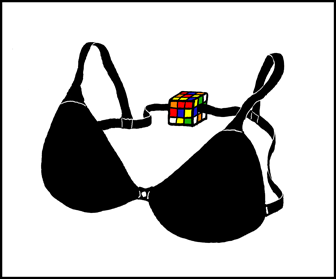
But I don't think I'm going to write about my life tonight. I just wanted to share the latest xkcd comic with you. I laughed out loud when I saw this one!

But I don't think I'm going to write about my life tonight. I just wanted to share the latest xkcd comic with you. I laughed out loud when I saw this one!
09 May 2008
Tozai to the E
Three months ago, exhausted after a long day of work and a hard hour of voice lessons, Lito and I sat at the counter facing the window, looking out over the city below us. A decision needed to be made.
"You know, I've been really busy lately. I don't think I can put in the time to really do a good job at this."
"I've been feeling the same way. But I'd like to do it if we can."
"Sure, I just don't want to commit to something I don't have the time to deliver on."
"Look, why don't we just do it for fun... it'll be good practice, and if we lose, no big deal. We'll just do the best we can."
"Ok, I'm in."
And thus the two-man vocal duo, "Tozai Express", was born.

You can imagine my surprise when we were chosen to go on to the semifinals in the Miki Gakki 2008 Duet Competition. Or perhaps you imagined it when I blogged about it about a month ago.
As the date of the semifinals drew near, we both found ourselves caught up with other things, busy, seldom able to get together to practice. We squeezed in some rehearsals at each other's houses late at night, or in hurried half-hour sessions after our voice lessons and before he had to run off to other rehearsals.
In our second-to-last rehearsal, we totally mixed things up, throwing in alternating rap and voice percussion parts during the bridge. In the last days before the competition I found myself frantically practicing my rap, quietly in my room, at 3am...
The competition itself was an incredible production. The lighting systems were amazing, and the event started off with a video worthy of network TV pre-Olympics hype. Slow-motion shots of last year's competitors singing their hearts out, and the winners overcome with tears of joy, powerfully narrated with a moving voiceover and triumphant background music. A bit dramatic, but it set the stage well.

Many of the other groups were quite amazing, and after about five groups had gone, we had already conceded defeat. These people were amazing singers, with tightly choreographed moves and meticulous costumes. They had obviously spent long hours practicing and it paid off. The genres were spread across the board, ranging from Disney songs to traditional Hawaiian music, to cutesy teeny-bopper music and Aretha Franklin.
We went on stage 10th out of 30 groups, and I was far more nervous than I had anticipated (considering that I perform on stage about once a month). This was evident in the fact that, standing in the middle of the stage in the blazing spotlights, in front of hundreds of people, with our backing track blasting from the massive speaker racks to either side, the song barely begun, I noticed something...
... nobody was singing!
And then I noticed something else...
... I was the one who was supposed to be singing!
Whatever my frantic heartrate had been a moment before, it spiked severalfold as I realized I had just ruined the song we had been practicing for months, and we hadn't even finished the first verse!
At the same time, though, it was like a pressure valve had been released... I had already screwed up the song, and we had already lost. So basically it was the two of us on stage with a captive audience for another 4.5 minutes. There was nothing for us to do but rock out and have fun!

Of course the most challenging part came afterwards, when they interviewed us on stage in Japanese... I ended up saying some stuff that sounded kinda ridiculous, but we got some laughs from the audience, so it was all good. Except that my Japanese teacher happened to be in the audience as well... I'm gonna get it on Friday! :P
Anyway, our friends were very supportive and everybody said we did a great job. There were still around 4 hours of performances to sit through before hearing the results, and most of my friends left soon after we finished.
Finally, it came time to announce the winners. By this time I had made a mental estimate of about a 35% chance of us being selected among the top 8 groups, on the off-chance that the judges decided to be forgiving of my brainfart at the beginning of the song.
There was more production drama, and they built up lots of tension in the style of any good awards show. As they were about to announce the winners, they rattled a bunch of stuff off in really fast Japanese, and I totally missed it. But Lito and I agreed that even if we did get chosen, we could just follow the lead of whoever got chosen before us.
And then they announced the first winners: "Number 10, Tozai Express"...
...
numb shock
...
"Dude, that's us"
...
"Really?!"
"What the @#$%^&?"
We stumbled up onto the stage, not knowing what to make of this.
The crowd was cheering wildly, and we both bowed. Then one of the judges came up and presented us each with ... a medal! Standing there in our vests, bowing our heads to receive our medals, the only image in my mind was of the last scene in Star Wars. Sans Princess Leia of course. ;)

So that's it. We're going to the finals!! We're really going to try to start early and do a solid job this time. This is so awesome.
A heartfelt thanks to all our friends who came to support us. If anybody wants to come cheer for us at the finals on June 8, drop me an email!
"You know, I've been really busy lately. I don't think I can put in the time to really do a good job at this."
"I've been feeling the same way. But I'd like to do it if we can."
"Sure, I just don't want to commit to something I don't have the time to deliver on."
"Look, why don't we just do it for fun... it'll be good practice, and if we lose, no big deal. We'll just do the best we can."
"Ok, I'm in."
And thus the two-man vocal duo, "Tozai Express", was born.
You can imagine my surprise when we were chosen to go on to the semifinals in the Miki Gakki 2008 Duet Competition. Or perhaps you imagined it when I blogged about it about a month ago.
As the date of the semifinals drew near, we both found ourselves caught up with other things, busy, seldom able to get together to practice. We squeezed in some rehearsals at each other's houses late at night, or in hurried half-hour sessions after our voice lessons and before he had to run off to other rehearsals.
In our second-to-last rehearsal, we totally mixed things up, throwing in alternating rap and voice percussion parts during the bridge. In the last days before the competition I found myself frantically practicing my rap, quietly in my room, at 3am...
The competition itself was an incredible production. The lighting systems were amazing, and the event started off with a video worthy of network TV pre-Olympics hype. Slow-motion shots of last year's competitors singing their hearts out, and the winners overcome with tears of joy, powerfully narrated with a moving voiceover and triumphant background music. A bit dramatic, but it set the stage well.
Many of the other groups were quite amazing, and after about five groups had gone, we had already conceded defeat. These people were amazing singers, with tightly choreographed moves and meticulous costumes. They had obviously spent long hours practicing and it paid off. The genres were spread across the board, ranging from Disney songs to traditional Hawaiian music, to cutesy teeny-bopper music and Aretha Franklin.
We went on stage 10th out of 30 groups, and I was far more nervous than I had anticipated (considering that I perform on stage about once a month). This was evident in the fact that, standing in the middle of the stage in the blazing spotlights, in front of hundreds of people, with our backing track blasting from the massive speaker racks to either side, the song barely begun, I noticed something...
... nobody was singing!
And then I noticed something else...
... I was the one who was supposed to be singing!
Whatever my frantic heartrate had been a moment before, it spiked severalfold as I realized I had just ruined the song we had been practicing for months, and we hadn't even finished the first verse!
At the same time, though, it was like a pressure valve had been released... I had already screwed up the song, and we had already lost. So basically it was the two of us on stage with a captive audience for another 4.5 minutes. There was nothing for us to do but rock out and have fun!
Of course the most challenging part came afterwards, when they interviewed us on stage in Japanese... I ended up saying some stuff that sounded kinda ridiculous, but we got some laughs from the audience, so it was all good. Except that my Japanese teacher happened to be in the audience as well... I'm gonna get it on Friday! :P
Anyway, our friends were very supportive and everybody said we did a great job. There were still around 4 hours of performances to sit through before hearing the results, and most of my friends left soon after we finished.
Finally, it came time to announce the winners. By this time I had made a mental estimate of about a 35% chance of us being selected among the top 8 groups, on the off-chance that the judges decided to be forgiving of my brainfart at the beginning of the song.
There was more production drama, and they built up lots of tension in the style of any good awards show. As they were about to announce the winners, they rattled a bunch of stuff off in really fast Japanese, and I totally missed it. But Lito and I agreed that even if we did get chosen, we could just follow the lead of whoever got chosen before us.
And then they announced the first winners: "Number 10, Tozai Express"...
...
numb shock
...
"Dude, that's us"
...
"Really?!"
"What the @#$%^&?"
We stumbled up onto the stage, not knowing what to make of this.
The crowd was cheering wildly, and we both bowed. Then one of the judges came up and presented us each with ... a medal! Standing there in our vests, bowing our heads to receive our medals, the only image in my mind was of the last scene in Star Wars. Sans Princess Leia of course. ;)
So that's it. We're going to the finals!! We're really going to try to start early and do a solid job this time. This is so awesome.
A heartfelt thanks to all our friends who came to support us. If anybody wants to come cheer for us at the finals on June 8, drop me an email!
21 April 2008
New toy - a green laser pointer!
Haha...
So my parents came to Japan - FINALLY - last week, and we had lots of adventures that I'd love to blog about. But one thing they brought me was a new green laser pointer! (which I had actually bought myself and had shipped to them, but details, details)
Anyway, it totally rocks, and I've been playing with it all weekend. Just thought I'd post this picture which, though juvenile, is still, in my opinion, cool. ;) Taken on long-exposure night mode in a pitch-black room.

By the way, on a related note, check out this cool application presented at the last Human-Robot Interaction conference - "A Point-and-Click Interface for the Real World"
So my parents came to Japan - FINALLY - last week, and we had lots of adventures that I'd love to blog about. But one thing they brought me was a new green laser pointer! (which I had actually bought myself and had shipped to them, but details, details)
Anyway, it totally rocks, and I've been playing with it all weekend. Just thought I'd post this picture which, though juvenile, is still, in my opinion, cool. ;) Taken on long-exposure night mode in a pitch-black room.
By the way, on a related note, check out this cool application presented at the last Human-Robot Interaction conference - "A Point-and-Click Interface for the Real World"
07 April 2008
Advanced technology, my butt!
Impulsive? Certainly. Gratuitous? Undoubtedly. Silly? Perhaps. But I have finally fulfilled one of my life-(in Japan)-long dreams. (And grammatically speaking, how _does_ one correctly insert a parenthetical note mid-(if this is even a word)-hyphenation?)
This was several years in coming, but something just told me the time was right to "ride the wave", so to speak, and join the Japanese in enjoying that pinnacle of technological achievements, the "Washlet".
Perhaps best likened to a creative fusion between a traditional toilet seat, R2-D2, and a supersoaker, most of my readers will have at least passing knowledge of this brilliant innovation from the nation who first pioneered the use of splintery wooden sticks as toilet paper many years ago.
The model I bought was at the "bottom end" of the price spectrum, and lacks so many of the sophisticated features that are advertised in the glossy brochures, such as the following:
- wall-mounted motion detection system
- self-opening toilet seat lid
- artificial "flushing" sound to cover biological noises
- built-in bathroom heater
- ejector seat mechanism
And yet, I find myself utterly unable to find any dissatisfaction with the basic functionality this device provides. Once I had worked my way through the sixteen pages of detailed installation instructions in Japanese, that is...

The experience
The excitement begins as you sit down on the (pre-heated) seat, and you feel and hear the main engines firing up, like a jet warming up on the tarmac. An internal ventilation system begins sucking in and filtering the air inside the bowl to remove any unwanted odors. Meanwhile, heating coils prime the water in a holding tank, heating it exactly to the temperature set via the built-in side-mounted control panel.
When your business is finished, you can reach up to grab the removable wall-mounted remote control panel and push the button with the international symbol for "butt" on it. A hidden panel deep within the machine slides back, and unseen, a long stainless steel cylinder extends from under the rim of the toilet seat beneath you, not unlike Luke's lightsaber emerging from Artoo's secret panel as Luke prepares to walk the plank on Jabba the Hutt's skiff.
Once fully extended, a jet of water leaps forth from the lightsaber. However, this is no random spray - it is a high-performance, precision-controlled stream. Not as clumsy or as random as a blaster, this is an elegant weapon for a more civilized time. The control panel sports a variety of buttons enabling you to delicately adjust the position and strength of the stream, set it to oscillate, fire it in pulses, or put it into overdrive. With a little practice, you can find just the combination of settings to blast the Sarlacc out of your, um, Pit of Carcoon.

As a bonus, there is an additional function for the ladies. Pressing the button with the girl's face on it (yes, that's next to the button with the international symbol for "butt" on it) triggers a smaller stainless steel cylinder to telescope out of the larger cylinder, reminiscent of the internal jaws of the creatures in Alien. This cylinder has several holes for delivering a more even, gentle spray, although of course with no less precision of control.
Every contingency has been anticipated. If you're worried about being startled by the experience and jumping up, spraying the walls with water, have no fear. A pressure switch in the toilet seat acts as a safety stop. If you're tired of leaning over to the side to find just the right combinations of control settings, worry no longer. The control panel is a detachable wireless remote control which bounces signals off the ceiling to a sensor on the back of the washlet.
But perhaps the most eerie function of all is the "etiquette spot", the effect of which is most poignant in the dark of night. Lifting the toilet seat automatically activates the "etiquette" system which, like a Predator UAV painting a target for your laser-guided weapon, projects a green dot in the center of the bottom of the toilet bowl, a vivid green bull's eye to keep men focused on the task at hand. Far, however, from being a solitary point in the darkness, the "etiquette spot" has the side effect of illuminating the entire bowl with an unnatural, otherworldly green glow, not unlike an ominous gateway to an evil B-movie nether dimension.

All of this technology and design together launches this device firmly into the curiously ambiguous space between "What in the *@#$% are they thinking?" and "I can't POSSIBLY live without this!" However what is irrefutable is the uncompromising quality of their precision design, which I can only imagine to be the product of decades of research by dedicated engineers, meticulously adjusting complex empirically-derived equations modeling viscosity and solubility (of, um, colloids?), and preparing their solutions for wind-tunnel testing by running elaborate simulations on high-precision finite-element models of the butt.
This was several years in coming, but something just told me the time was right to "ride the wave", so to speak, and join the Japanese in enjoying that pinnacle of technological achievements, the "Washlet".
Perhaps best likened to a creative fusion between a traditional toilet seat, R2-D2, and a supersoaker, most of my readers will have at least passing knowledge of this brilliant innovation from the nation who first pioneered the use of splintery wooden sticks as toilet paper many years ago.
The model I bought was at the "bottom end" of the price spectrum, and lacks so many of the sophisticated features that are advertised in the glossy brochures, such as the following:
- wall-mounted motion detection system
- self-opening toilet seat lid
- artificial "flushing" sound to cover biological noises
- built-in bathroom heater
- ejector seat mechanism
And yet, I find myself utterly unable to find any dissatisfaction with the basic functionality this device provides. Once I had worked my way through the sixteen pages of detailed installation instructions in Japanese, that is...
The experience
The excitement begins as you sit down on the (pre-heated) seat, and you feel and hear the main engines firing up, like a jet warming up on the tarmac. An internal ventilation system begins sucking in and filtering the air inside the bowl to remove any unwanted odors. Meanwhile, heating coils prime the water in a holding tank, heating it exactly to the temperature set via the built-in side-mounted control panel.
When your business is finished, you can reach up to grab the removable wall-mounted remote control panel and push the button with the international symbol for "butt" on it. A hidden panel deep within the machine slides back, and unseen, a long stainless steel cylinder extends from under the rim of the toilet seat beneath you, not unlike Luke's lightsaber emerging from Artoo's secret panel as Luke prepares to walk the plank on Jabba the Hutt's skiff.
Once fully extended, a jet of water leaps forth from the lightsaber. However, this is no random spray - it is a high-performance, precision-controlled stream. Not as clumsy or as random as a blaster, this is an elegant weapon for a more civilized time. The control panel sports a variety of buttons enabling you to delicately adjust the position and strength of the stream, set it to oscillate, fire it in pulses, or put it into overdrive. With a little practice, you can find just the combination of settings to blast the Sarlacc out of your, um, Pit of Carcoon.
As a bonus, there is an additional function for the ladies. Pressing the button with the girl's face on it (yes, that's next to the button with the international symbol for "butt" on it) triggers a smaller stainless steel cylinder to telescope out of the larger cylinder, reminiscent of the internal jaws of the creatures in Alien. This cylinder has several holes for delivering a more even, gentle spray, although of course with no less precision of control.
Every contingency has been anticipated. If you're worried about being startled by the experience and jumping up, spraying the walls with water, have no fear. A pressure switch in the toilet seat acts as a safety stop. If you're tired of leaning over to the side to find just the right combinations of control settings, worry no longer. The control panel is a detachable wireless remote control which bounces signals off the ceiling to a sensor on the back of the washlet.
But perhaps the most eerie function of all is the "etiquette spot", the effect of which is most poignant in the dark of night. Lifting the toilet seat automatically activates the "etiquette" system which, like a Predator UAV painting a target for your laser-guided weapon, projects a green dot in the center of the bottom of the toilet bowl, a vivid green bull's eye to keep men focused on the task at hand. Far, however, from being a solitary point in the darkness, the "etiquette spot" has the side effect of illuminating the entire bowl with an unnatural, otherworldly green glow, not unlike an ominous gateway to an evil B-movie nether dimension.
All of this technology and design together launches this device firmly into the curiously ambiguous space between "What in the *@#$% are they thinking?" and "I can't POSSIBLY live without this!" However what is irrefutable is the uncompromising quality of their precision design, which I can only imagine to be the product of decades of research by dedicated engineers, meticulously adjusting complex empirically-derived equations modeling viscosity and solubility (of, um, colloids?), and preparing their solutions for wind-tunnel testing by running elaborate simulations on high-precision finite-element models of the butt.
02 April 2008
Duet Competition
So, they announced the results of the Miki Gakki duet competition a few hours ago, and we passed the first round! Gotta come up with something good for the semifinals now...
Here are the results from the first round. I'm so psyched!
Here's a shot of the two of us with our vocal teacher, just after the first-round competition a month ago.

Here are the results from the first round. I'm so psyched!
Here's a shot of the two of us with our vocal teacher, just after the first-round competition a month ago.
21 March 2008
Awesome Lifelike Quadruped Walking Robot
Ok, it's very late at night but I'll blame it on the jet-lag. Although of course it's not jet-lag, it's just my lifestyle.
I felt the obligation to post this video due to the sheer numbers of friends from across the world who have emailed this link to me. The lifelikeness of this robot's motion is really eerie. Of course, my robots roll rather than walk, but I can certainly appreciate the vast amount of work that goes into making a machine operate with this level of flexibility, speed, and robustness!
Of course, thinking of this technology in military hands is a little scary. I just got back from a robotics conference where they had a whole panel discussion on robo-ethics, and a lot of that centered around the military use of robots. Not to delve into that abyss at the moment, but watching this video in that context does conjure up images of unstoppable invading robot armies swarming across the landscape...
I felt the obligation to post this video due to the sheer numbers of friends from across the world who have emailed this link to me. The lifelikeness of this robot's motion is really eerie. Of course, my robots roll rather than walk, but I can certainly appreciate the vast amount of work that goes into making a machine operate with this level of flexibility, speed, and robustness!
Of course, thinking of this technology in military hands is a little scary. I just got back from a robotics conference where they had a whole panel discussion on robo-ethics, and a lot of that centered around the military use of robots. Not to delve into that abyss at the moment, but watching this video in that context does conjure up images of unstoppable invading robot armies swarming across the landscape...
28 February 2008
The Wrong Side of the Brain
So... I was all psyched to participate in this experiment where they were going to scan my brain and stuff. I was really looking forward to it and hoping I could get a screencapture or two of my brain in action.
Alas, I was disqualified during the initial screening. Why? Because I'm left-handed. Apparently left-handed people tend to have screwy brain wiring and thus don't make good experimental subjects for these sorts of experiments.
Bummed out about that, I came home and did some reading on Wikipedia and whatnot. It looks like the term for what I am is "cross-dominant", since I favor my left hand for some tasks (writing, using scissors, mousing - generally things requiring precision) and my right for others (baseball, splitting wood, hockey, etc. - generally things requiring strength). On top of that, I'm right-footed, but left-eyed. I don't know which is my dominant ear, but I suspect it's my left.
I'm really curious as to how this affects my cognitive processing and my brain's layout.. apparently there are all sorts of variations between people and an endless supply of theories out there as to causes.
I also ran across this rather interesting article, showing a direct correlation between murder rates (!) and left-handedness in primitive societies. But even though lots of half-baked theories exist, the conclusion seems to be that basically nobody has any idea what handedness is all about.
Of course, whenever I sit around pondering why I'm left-handed, I remind myself that there are deeper mysteries in the world - for example, why I am I. That one has been spinning my head around for years now. And then I am content to let the questions lie. Until the next unexplainable mystery pops into my head. ;)
And of course, I had to take a 20-question quiz to see what it said. I don't know what these results mean in light of my cross-dominance, however. But I do think "cross-dominance" is a pretty kickass-sounding term. :)
(is there such thing as "cross-submissiveness", for that matter? ;)
(and should "kickass-sounding" actually be doubly-hyphenated?)
um... dogs? Prefers them to what? To cats? Or to ... lack of dogs?
Alas, I was disqualified during the initial screening. Why? Because I'm left-handed. Apparently left-handed people tend to have screwy brain wiring and thus don't make good experimental subjects for these sorts of experiments.
Bummed out about that, I came home and did some reading on Wikipedia and whatnot. It looks like the term for what I am is "cross-dominant", since I favor my left hand for some tasks (writing, using scissors, mousing - generally things requiring precision) and my right for others (baseball, splitting wood, hockey, etc. - generally things requiring strength). On top of that, I'm right-footed, but left-eyed. I don't know which is my dominant ear, but I suspect it's my left.
I'm really curious as to how this affects my cognitive processing and my brain's layout.. apparently there are all sorts of variations between people and an endless supply of theories out there as to causes.
I also ran across this rather interesting article, showing a direct correlation between murder rates (!) and left-handedness in primitive societies. But even though lots of half-baked theories exist, the conclusion seems to be that basically nobody has any idea what handedness is all about.
Of course, whenever I sit around pondering why I'm left-handed, I remind myself that there are deeper mysteries in the world - for example, why I am I. That one has been spinning my head around for years now. And then I am content to let the questions lie. Until the next unexplainable mystery pops into my head. ;)
And of course, I had to take a 20-question quiz to see what it said. I don't know what these results mean in light of my cross-dominance, however. But I do think "cross-dominance" is a pretty kickass-sounding term. :)
(is there such thing as "cross-submissiveness", for that matter? ;)
(and should "kickass-sounding" actually be doubly-hyphenated?)
You Are 15% Left Brained, 85% Right Brained |
 The left side of your brain controls verbal ability, attention to detail, and reasoning. Left brained people are good at communication and persuading others. If you're left brained, you are likely good at math and logic. Your left brain prefers dogs, reading, and quiet. The right side of your brain is all about creativity and flexibility. Daring and intuitive, right brained people see the world in their unique way. If you're right brained, you likely have a talent for creative writing and art. Your right brain prefers day dreaming, philosophy, and sports. |
um... dogs? Prefers them to what? To cats? Or to ... lack of dogs?
13 November 2007
Balanced Steps
As many of you know, I'm often criticized for my less-than-symmetrical choices of footwear. Yet it seems that this time the asymmetrical boot is on the other foot, so to speak.
Evidently there are some who would spend nearly $200 on a pair of boots and yet not notice while trying them on in the store that the left is substantially larger than the right... maybe someone's mind was on her puppy rather than on her dogs. ;)
[ed - so I actually wrote this in reference to my girlfriend at the time, but then got a perplexed email from my mom. Apparently, at the same time my girlfriend had bought these boots, my mom had also bought a pair of boots, one of which was too big for her, which she hadn't noticed... and she also had a puppy!]
Evidently there are some who would spend nearly $200 on a pair of boots and yet not notice while trying them on in the store that the left is substantially larger than the right... maybe someone's mind was on her puppy rather than on her dogs. ;)
[ed - so I actually wrote this in reference to my girlfriend at the time, but then got a perplexed email from my mom. Apparently, at the same time my girlfriend had bought these boots, my mom had also bought a pair of boots, one of which was too big for her, which she hadn't noticed... and she also had a puppy!]
10 November 2007
Clinton vs Obama
My friend Berta just posted this article on Facebook: http://www.theatlantic.com/doc/200712/obama
I haven't been following the political race too closely, but I think this article brings out a number of interesting points. It's also more well-written than any summary I could write, but I'll write one anyway for the "skimmers" who seem to be so disproportionately overrepresented in my blog readership... :P
First, the main thrust of the article is that the most important thing about this election is not about the specifics of what we're going to do in Iraq, or how the health care system will evolve, or policy about gay marriage... there aren't so many dramatic differences between candidates' stances on these issues, in terms of what actions they would realistically take.
The article's main argument is that, moreso than these specific policy issues, the biggest issue is the deep schism in American society that reaches back to Vietnam, the hippies, and the Civil Rights movement, a problem which has been greatly exacerbated by the fundamentalist right leaning of the Bush administration. It argues that Obama would be a much better choice than Clinton in terms of unifying the nation and bridging this divide.
There are two other points I found salient in the article. The first was sort of a sidenote, but it made me think... nobody questions the power of the media in shaping the outcome of an election. However, a divided nation voting between diametrically opposed candidates provides an exciting and dramatic battle, captures the public interest, and consequently boosts ratings. So really, healing the nation is not in the interest of the media. Keeping things tense and divided makes for a better show.
Another, unrelated, point was that many of the children in the Middle East have never known any American president other than Bush, and it is critically important to change the image that America projects if we want to gain the trust of the Muslim world.
Anyway, as I said, the article is much more well-written than any summary I can provide. My English skills are really going downhill, as are my Japanese skills. Soon I will only be able to communicate in grunts, gestures, and source code.
I haven't been following the political race too closely, but I think this article brings out a number of interesting points. It's also more well-written than any summary I could write, but I'll write one anyway for the "skimmers" who seem to be so disproportionately overrepresented in my blog readership... :P
First, the main thrust of the article is that the most important thing about this election is not about the specifics of what we're going to do in Iraq, or how the health care system will evolve, or policy about gay marriage... there aren't so many dramatic differences between candidates' stances on these issues, in terms of what actions they would realistically take.
The article's main argument is that, moreso than these specific policy issues, the biggest issue is the deep schism in American society that reaches back to Vietnam, the hippies, and the Civil Rights movement, a problem which has been greatly exacerbated by the fundamentalist right leaning of the Bush administration. It argues that Obama would be a much better choice than Clinton in terms of unifying the nation and bridging this divide.
There are two other points I found salient in the article. The first was sort of a sidenote, but it made me think... nobody questions the power of the media in shaping the outcome of an election. However, a divided nation voting between diametrically opposed candidates provides an exciting and dramatic battle, captures the public interest, and consequently boosts ratings. So really, healing the nation is not in the interest of the media. Keeping things tense and divided makes for a better show.
Another, unrelated, point was that many of the children in the Middle East have never known any American president other than Bush, and it is critically important to change the image that America projects if we want to gain the trust of the Muslim world.
Anyway, as I said, the article is much more well-written than any summary I can provide. My English skills are really going downhill, as are my Japanese skills. Soon I will only be able to communicate in grunts, gestures, and source code.
Subscribe to:
Posts (Atom)